

Many businesses begin with:
It works until growth exposes inefficiencies.
Common issues:
At this stage, businesses need more than tools, they need systems.
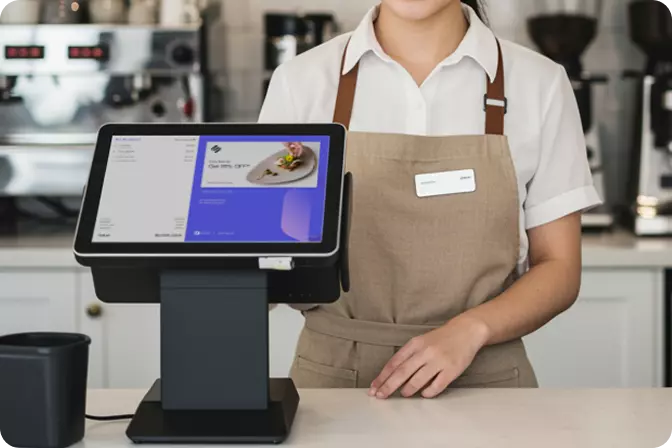
In the past, POS was simply a cash register.
Now, a POS system is:
With cloud-based technology, business owners can even monitor operations from anywhere. This is what makes POS the “brain” of modern business.
Different needs:
|
Task |
Manual |
POS |
|
Closing |
Slow |
Instant |
|
Inventory |
Manual |
Real-time |
|
Reports |
Manual |
Automated |
|
Errors |
High |
Low |
QRIS & e-wallets are becoming the new standard
Control your business from anywhere
Decisions based on data, not intuition
POS + CRM + Inventory + Accounting
If your business is still using manual systems, this is the right time to switch.
A POS system is not just a tool—it’s an investment in growth.
With the right system, you can:
At a certain stage, businesses often reach a point where their existing systems need to evolve alongside their operations.
This shift is not about replacing what was wrong, but about adapting to increasing complexity—such as inventory tracking, transaction recording, and the need for faster, more accurate reporting.
In this context, modern POS systems help streamline processes while providing better visibility into business performance.
Today, there are various POS solutions available in Indonesia, including OMNI POS, which offers an integrated approach within a single system.
In general, POS platforms with this approach typically include:
These capabilities can help reduce administrative workload and simplify day-to-day operations.
Adoption does not have to happen all at once.
Many businesses start with one function—such as upgrading their cashier system—and expand gradually.
It’s time to switch to a more practical way of managing your daily business operations with OMNI POS!