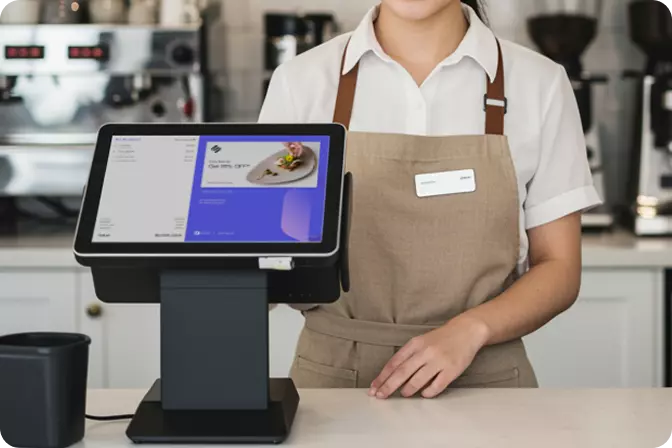

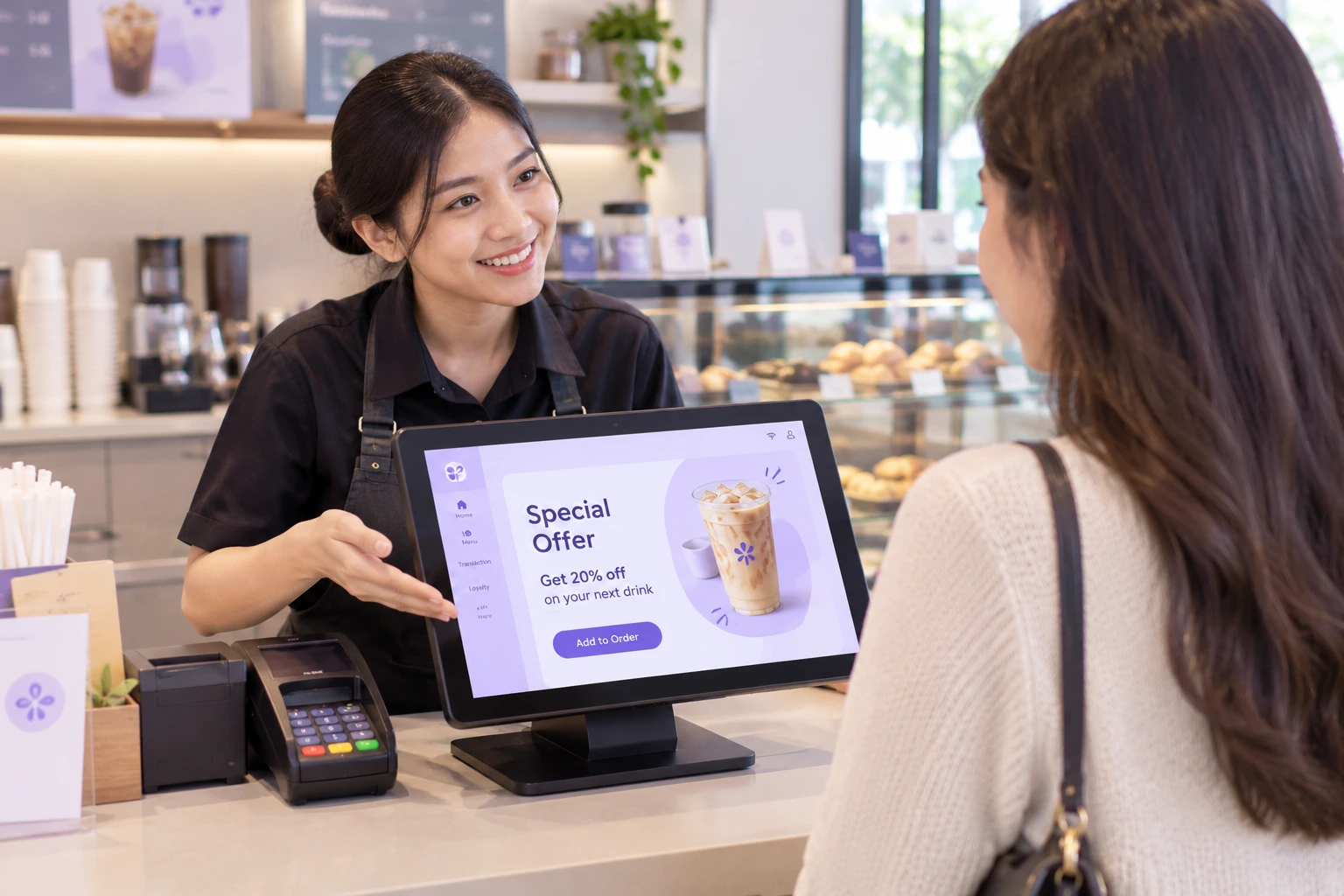
Imagine a restaurant running a buy-two-get-one-free promotion every weekend. If cashiers still calculate discounts manually, queues may move more slowly, and the risk of transaction errors increases. This is where promotion features in a point-of-sale (POS) system can help businesses manage promotions and apply discounts more efficiently.
For F&B and retail businesses, promotions involve more than simply offering price reductions. They need to align with business objectives, protect profit margins, and be applied consistently across all outlets. With the right POS system, business owners can also evaluate promotional performance using sales data.
Promotion features in a POS system are tools that help businesses configure promotional rules and apply them to sales transactions. Depending on the system's capabilities, these features may support product discounts, discounts based on transaction value, bundle deals, and special offers with specific purchase requirements.
Without an integrated system, cashiers may need to memorise promotional terms, calculate discounts, or manually check whether products qualify for an offer. A POS system simplifies these processes and ensures more consistent implementation, particularly for businesses with multiple cashiers, product categories, or outlets. However, the types of promotions available depend on the features offered by each POS provider.
Not all promotions serve the same purpose. Some aim to increase transaction volume, encourage customers to purchase more products, or help clear specific inventory. Understanding the available promotional options enables business owners to select strategies that match their operational needs.
Common types of promotions used by F&B and retail businesses include:
Before launching a promotion, make sure the POS system can accommodate the required promotional mechanism. Check whether discount rules can be restricted by product, promotional period, outlet, or transaction requirements to prevent offers from being applied outside the intended conditions.
Effective promotional planning starts with business objectives, not the size of the discount. Business owners need to determine the outcomes they want to achieve and translate them into rules that are easy for both customers and cashiers to understand.
Here are practical steps for setting up promotions through a POS system.
Determine whether the promotion aims to increase average transaction value, introduce a new product, clear inventory, or attract customers during off-peak hours. Having a specific objective makes it easier to evaluate the results once the promotion ends.
Use product discounts to introduce new menu items, bundle deals to encourage customers to purchase several products together, or minimum-spend discounts to increase spending per transaction. Choose a mechanism that reflects customer behaviour and your business conditions.
Suppose a product sells for Rp50,000 and costs Rp30,000 to produce or procure. Its gross profit before operating expenses is Rp20,000. If the business offers a 20% discount, the selling price drops to Rp40,000, reducing gross profit to Rp10,000. This means the discount cuts the gross profit per unit by 50%, even though the discount itself represents only 20% of the original selling price.
Specify the eligible products, start and end dates, minimum purchase requirements, and participating outlets. If the system supports these settings, configure the rules directly in the POS to reduce reliance on manual instructions.
Run simulated transactions to ensure that discounts are calculated correctly, purchase requirements are met, and final prices match the promotional terms. This step is essential for reducing errors that could lead to financial losses or customer complaints.
Once the promotion is underway or has ended, review the number of transactions, revenue, average transaction value, best-selling products, and resulting profit margins. Compare these figures with those from a regular trading period to determine whether the promotion has delivered positive results.
One common mistake is setting discounts without calculating their impact on profit margins. Revenue may increase during a promotion, but profits do not necessarily follow. Other mistakes include unclear promotional terms, failing to deactivate offers when they expire, and applying discounts inconsistently across outlets.
To avoid these issues, use transaction data to guide business decisions. Make sure promotional rules are properly documented, restrict discount permissions where necessary, and review sales reports regularly. For multi-outlet businesses, a POS system with centralised management can also help maintain consistent promotional rules across branches.
As businesses expand their product ranges and operate more cash registers or outlets, promotional management needs to become part of their everyday sales processes. OMNI POS is a point-of-sale solution for F&B and retail businesses that helps manage transactions and monitor business operations. With a POS system suited to their needs, business owners can reduce their reliance on manual record-keeping and use sales data to evaluate promotional performance.
Before choosing a POS system for promotional management, make sure its features match your business requirements. These may include discount mechanisms, scheduling options, restrictions by product or outlet, and transaction reporting capabilities. Visit getomni.id to learn more about OMNI POS and explore how the right POS system can support your business operations and sales strategies.

 EN
 ID