
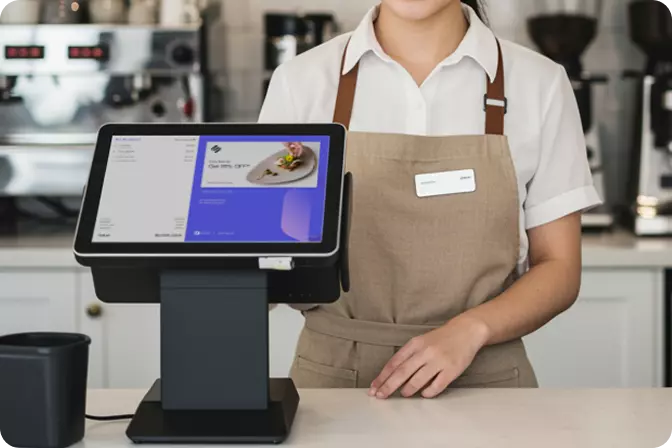


A point of sales application (POS) is software used to manage sales transactions at the checkout point of a business. The system typically combines cashier functions, inventory management, sales reporting, and payment integration in a single platform.
In simple terms, the point of sale is the location where a transaction between a customer and a merchant is completed. The system calculates the total purchase amount, processes payment, and generates receipts as proof of transaction.
Modern POS systems, however, do much more than process payments. They function as operational data centers that help businesses analyze sales performance, customer behavior, and operational efficiency.
Digital transformation has pushed businesses to operate faster, more accurately, and more data-driven.
A POS application helps achieve these goals through several advantages:
With POS technology, business owners can monitor sales, stock levels, and staff performance through a centralized dashboard.
The POS industry continues to grow rapidly as businesses adopt digital technology.
Key industry statistics include:
In Indonesia, POS adoption is also driven by the growth of digital payments, QRIS transactions, and the digitalization of small and medium enterprises.
Installed directly on local computers or servers.
Stores transaction data on cloud servers for remote access.
Runs on tablets or smartphones for flexible operations.
Combines local and cloud systems for reliability.
Today, there are several types of POS systems designed to meet the needs of different industries. Each system offers unique advantages, which means businesses must choose the solution that best aligns with their operational requirements.
POS systems designed for small and medium enterprises typically focus on the needs of small retail businesses. These systems usually offer simple and user-friendly interfaces, making them suitable for businesses that are just beginning their digital transformation. The features generally include transaction recording, product management, and basic sales reporting.
In contrast, POS systems developed specifically for the restaurant and food & beverage (F&B) industry offer more specialized functions. These systems often include table management features, integration with kitchen display systems (KDS), and structured order management capabilities. Such features help restaurants speed up service while reducing the risk of order errors.
There are also omnichannel POS systems designed for modern retail businesses. This type of POS enables seamless integration between offline sales in physical stores and online sales channels such as marketplaces or e-commerce platforms. With this system, sales data and inventory levels can be synchronized automatically across multiple channels.
Meanwhile, cloud-based POS solutions have become one of the most flexible options because they can be used across various industries. Cloud POS stores data on remote servers, allowing business owners to monitor transactions, sales reports, and inventory in real time from multiple devices and locations.
From these comparisons, it becomes clear that every business has different POS requirements. Therefore, selecting a system that matches the business scale, operational model, and long-term growth plans is a critical decision.
Common challenges include:
Consider the following factors:
In today’s data-driven business environment, a point of sales application is no longer just a digital cash register. POS systems have evolved into operational hubs that connect transactions, inventory, payments, and business analytics within a unified ecosystem.
With the right system in place, businesses can improve operational efficiency, understand customer behavior, and design more effective sales strategies. Transaction data no longer serves merely as a record of sales, but also as a valuable source of insights that support strategic decision-making.
One solution designed to support these needs is OMNI POS. This platform provides a point of sales system that goes beyond transaction processing by helping businesses manage operations in a more integrated way. Through features such as inventory management, real-time sales reporting, and integration with digital payments and other technology ecosystems, OMNI POS enables businesses to run their operations more efficiently and with greater visibility.
With a flexible and scalable approach, systems like OMNI POS allow retail and F&B businesses to manage sales, monitor business performance, and understand customer behavior through a centralized dashboard.
Ultimately, investing in a modern and integrated POS system helps businesses not only stay competitive but also grow sustainably.
Start transforming your business operations with the right POS system and build a stronger foundation for efficient, data-driven, and scalable sales management.