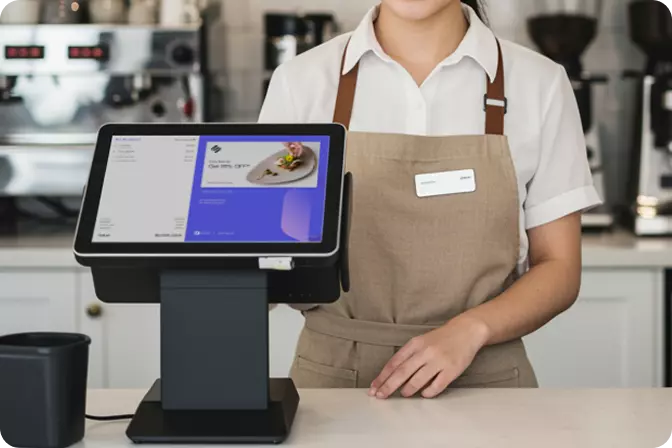


Hotel POS systems are no longer used solely to process guest payments. With hotel operations spanning restaurants, room service, bars, spas, and multiple outlets, POS systems are increasingly becoming a central platform for recording transactions and managing sales data. The hospitality industry is also moving towards cloud-based POS systems, multi-outlet integration, digital payments, and real-time data management, allowing management teams to make decisions based on up-to-date operational information.
This shift has changed what hotels expect from their POS systems. A hotel needs more than a system that can process payments and print receipts. Management teams need a solution that can connect transactions across different points of sale and make operational data easier to monitor.
Hotels have a more complex operational structure than conventional retail businesses. A single property may have a restaurant, coffee shop, bar, pool bar, room service, or other outlets, all processing transactions simultaneously. As a result, multi-outlet integration has become an important requirement for hotel POS systems. Transaction data from different outlets can be consolidated into a single system, reducing the need for management to rely on manual reports from individual cashiers.
The need becomes even more significant for hotel groups operating across multiple properties. A cloud-based POS system can allow data from different locations to be managed through a centralized platform, provided that the system and operational structure support multi-property management.
Cloud-based POS systems are becoming increasingly relevant because hotel operations run throughout the day and are not always managed from a single location. Owners and management teams need access to sales information without having to wait for end-of-shift reports or daily reconciliations.
With a cloud-based POS system, transaction data can be stored and updated within a centralized platform, with access managed according to user permissions. Management can monitor outlet performance, review sales reports, and compare results across different periods without manually consolidating information from separate devices.
Changes in payment behavior are also influencing how hotel POS systems are designed. Guests now have more payment options, ranging from cards and QRIS to other digital payment methods. For hotels, this means their POS systems need to record transactions accurately without making the payment process unnecessarily complicated.
Integrating payment methods with a POS system can help consolidate transaction and payment data, making reconciliation more straightforward. This becomes particularly important for high-volume outlets, where the greater the number of transactions, the greater the need for consistent and accurate payment records.
Another growing trend in hospitality management is the use of data to evaluate business performance. Data generated by hotel POS systems is no longer simply an archive of completed transactions. It can also reveal sales patterns and provide insights into the performance of individual outlets. Management, for example, can identify best-selling products, peak transaction periods, or performance differences between outlets.
These insights can support decisions related to menu planning, inventory management, promotional strategies, and workforce requirements. The more integrated transaction data becomes, the easier it is for hotel management to connect point-of-sale activity with broader operational decisions.
In hotel operations, repetitive administrative tasks can take up time that could otherwise be spent improving guest service. Sales reconciliation, transaction checking, payment recording, and consolidating reports from multiple outlets are examples of tasks that often take place after transactions have been completed.
A hotel POS system can automate parts of these processes. Transaction data is recorded as payments are processed and can then be used to generate reports based on management requirements. The fewer manual steps required to produce operational reports, the lower the risk of errors caused by repetitive data entry.
Choosing a hotel POS system should involve more than assessing its ability to process transactions. The system should reflect the hotel's operational complexity, number of outlets, and reporting requirements. Several aspects are worth considering:
With these requirements in mind, a hotel POS system should ideally become part of the hotel's operational infrastructure rather than simply functioning as a payment tool at the cashier counter.
OMNI POS is a POS system designed to help businesses manage transactions and operations across multiple outlets within a single system. For hospitality businesses, this approach can be particularly relevant when restaurants, bars, coffee shops, and other outlets need a more integrated way to record and manage transactions.
OMNI also provides sales data management that can help owners and management teams understand business performance through transaction data. This means a hotel POS system can serve a broader purpose than payment processing alone, becoming one of the data sources used to evaluate operational performance.
Ultimately, the development of hotel POS systems reflects the hospitality industry's growing need for integrated operations. As the number of outlets increases, payment methods become more diverse, and demand for timely data grows, POS systems need to evolve from basic transaction tools into a more integral part of hotel operations.
For hotels evaluating a new POS system, the first step is straightforward. Map out how transactions are currently processed across each outlet, how reports are consolidated, and which processes still rely on manual work. From there, it becomes much easier to identify the type of hotel POS system that best fits the property's operational needs.

 EN
 ID