
Running a fast food business requires more than serving delicious food at competitive prices. Service speed, convenient ordering options, and consistent operations also play a significant role in shaping the customer experience. This is why fast food restaurant POS systems have become increasingly important, particularly for businesses looking to adopt digital services and expand their outlet networks.
The industry continues to offer promising opportunities. According to Euromonitor International data cited in a report by Agriculture and Agri-Food Canada, Indonesia's limited-service restaurant market was valued at approximately US$2.57 billion in 2024 and is projected to grow at an average annual rate of 6.2% through 2029. This growth also means that competition among businesses is becoming increasingly intense.
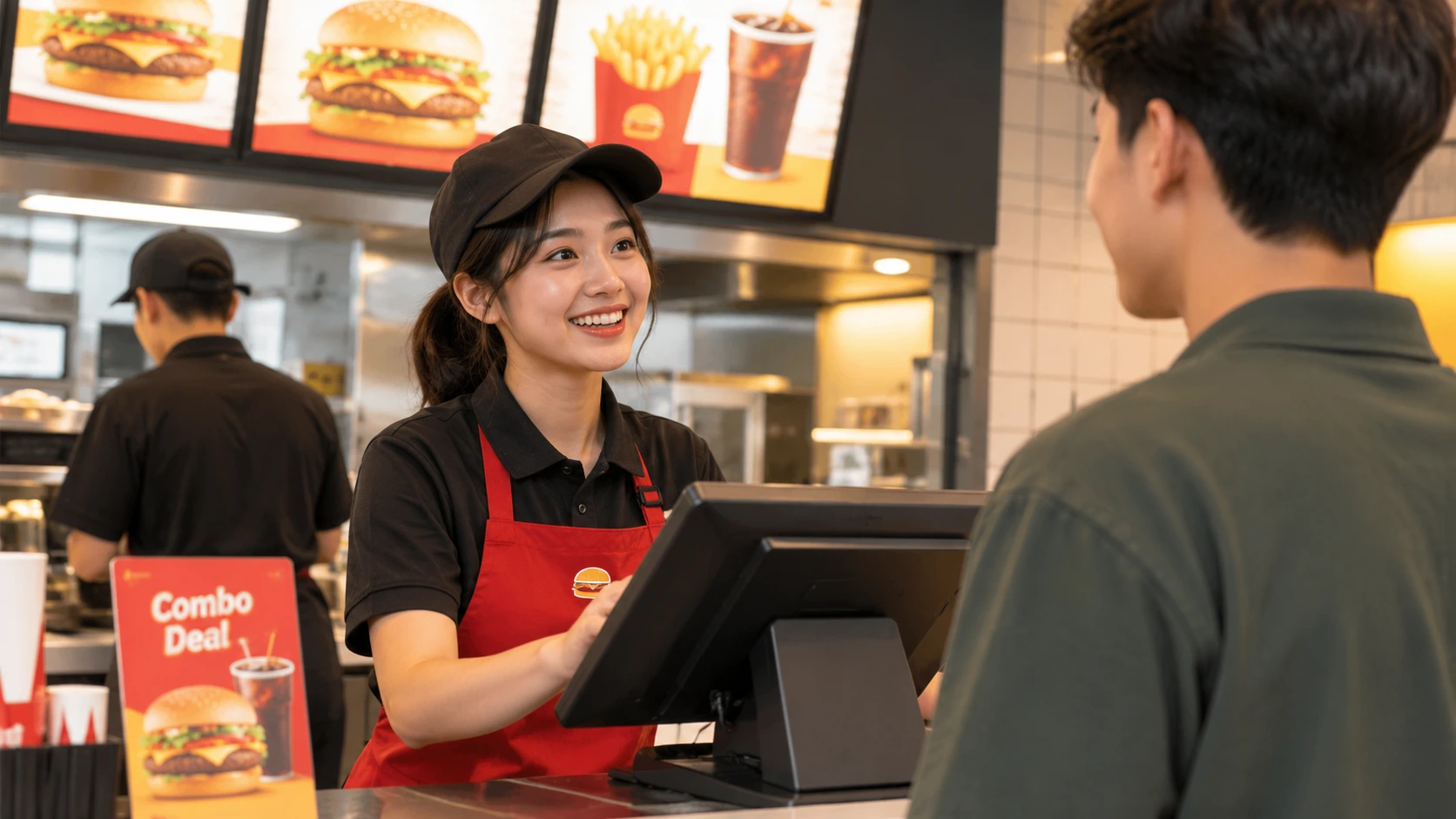
Fast food restaurants typically handle high transaction volumes within short periods. Customers expect the entire process, from placing an order and making a payment to receiving their food, to be quick and hassle-free.
However, maintaining service speed becomes more challenging during peak hours. Cashiers must process orders quickly, kitchen staff need accurate order information, and employees must ensure that every order is prepared in the correct sequence. Even a minor recording error can result in food being prepared incorrectly, longer waiting times, and a poorer customer experience.
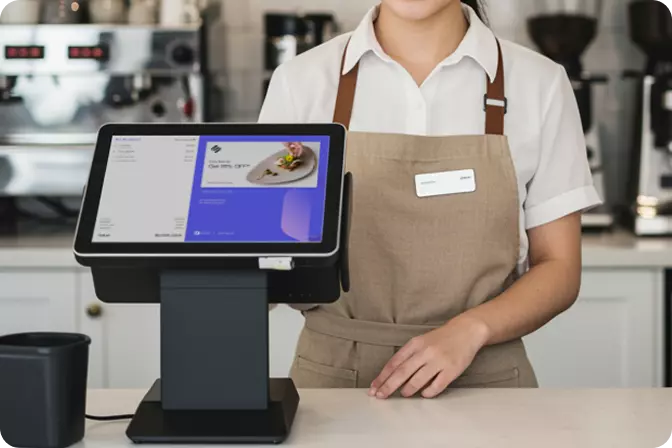
This is where fast food restaurant POS systems come into play. A Point of Sale (POS) system helps manage transactions, record orders, and synchronise sales information. For businesses opening their first outlet, adopting a POS system from the beginning can also establish more structured operational workflows.
Fast food customers now have more ways to place their orders. In addition to ordering in person, they can use food delivery applications, restaurant websites, and other digital ordering platforms.
This shift requires restaurants to manage orders from multiple channels simultaneously. Without an integrated system, staff may have to deal with orders spread across different devices, separate sales records, and difficulties tracking order statuses.
An omnichannel POS system helps centralise transaction management across different sales channels. Through OMNI, F&B businesses can integrate transaction management and sales channels within a single ecosystem, giving business owners better visibility into their sales activities.
Modern POS systems have evolved into operational management tools rather than simply devices for calculating payments and printing receipts.
Several technologies are becoming increasingly relevant to fast food businesses:
The implementation of these technologies should depend on each business's scale and operational needs. A restaurant with only one outlet may not require every feature immediately. However, choosing a flexible system makes it easier to adapt as the business grows.
OMNI provides a POS ecosystem that helps F&B businesses manage transactions and daily operations. Features such as payment integration and Kitchen Display Systems can support more organised restaurant workflows.
As restaurants expand and open additional branches, operational complexity increases. Business owners must monitor sales, compare outlet performance, and maintain consistent service standards across locations.
A POS system with multi-outlet management capabilities allows businesses to connect multiple branches through a centralised dashboard. Sales data can be monitored in one place, giving owners a clearer basis for evaluating performance and making expansion decisions.
Through OMNI, F&B business owners can also monitor sales activities across multiple outlets within an integrated system. This helps reduce reliance on manual reporting as the business expands.
Choosing a POS system should involve more than comparing hardware prices or counting the number of available features. Business owners need to consider their current operational requirements as well as their long-term growth plans.
Here are several important factors to evaluate:
These considerations can help business owners choose technology that genuinely supports their operational needs rather than simply following industry trends.
The fast food industry continues to evolve alongside changing consumer behaviour and advances in ordering technology. Service speed, sales channel integration, and operational visibility have become increasingly important for businesses seeking to remain competitive.
For this reason, a fast food restaurant POS system should be viewed as an operational investment rather than merely a payment processing tool.
Whether you are launching your first fast food restaurant or expanding an existing outlet network, OMNI can help streamline transaction management and F&B operations through an integrated system. Explore its features and solutions at getomni.id to find the right system for your business needs.

 EN
 ID