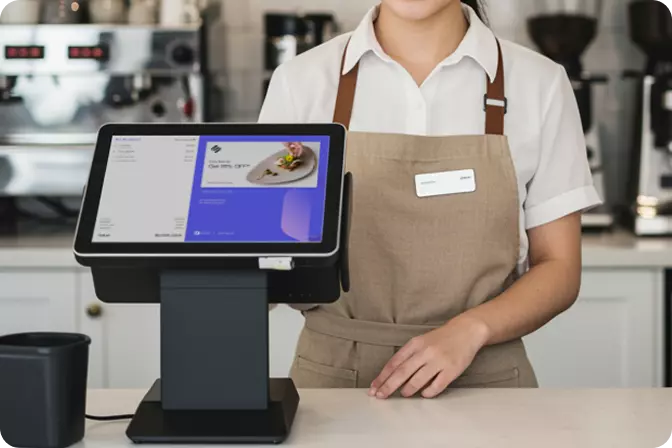


Cashier apps for wholesale stores do more than record transactions. They also help business owners manage inventory, tiered pricing, supplier purchases, and sales reports within a single system. As wholesale businesses become increasingly complex, basic cashier applications are gradually giving way to more integrated Point of Sale (POS) systems that support broader operational needs. This shift matters because wholesale stores handle higher transaction volumes, wider product ranges, and different purchasing patterns compared to conventional retail businesses.
For wholesale store owners, choosing a cashier app is not simply about finding a tool that speeds up payments. The right system should help minimise recording errors, maintain stock availability, and provide a more accurate overview of business performance.
Wholesale stores typically manage hundreds or even thousands of SKUs (Stock Keeping Units), large transaction volumes, and customers with varying purchasing requirements. A single product may also have different prices depending on the quantity purchased or the type of customer.
When business operations still rely heavily on manual record-keeping, several challenges can arise:
These challenges may not be immediately noticeable when a business is still relatively small. However, as customer numbers and transaction volumes increase, manual processes can slow down daily operations and make business decisions more difficult.
Not all cashier applications offer the same capabilities. Some are designed primarily to record transactions, while modern POS systems connect sales activities with inventory management and business reporting.
The following table highlights the differences between the two based on the operational needs of wholesale stores.
|
Aspect |
Basic Cashier App |
Integrated POS System |
|
Transactions |
Records payments |
Records transactions and updates sales data |
|
Inventory management |
Limited or manual tracking |
Monitors stock changes based on transactions |
|
Product pricing |
Standard pricing |
Supports flexible pricing configurations |
|
Reporting |
Basic transaction summaries |
Sales analysis and business performance reports |
|
Multi-outlet management |
Generally limited |
Can manage multiple outlets within one system |
|
Monitoring |
Depends on the cashier device |
Can provide centralised access to business data |
The most significant difference lies in data integration. With a basic cashier application, business owners may still need to transfer sales data into spreadsheets to calculate inventory levels and evaluate business performance. In contrast, an integrated POS system helps reduce repetitive tasks by connecting transaction data with other operational functions.
In other words, the more complex a wholesale store's operations become, the greater the benefits of using a POS system that goes beyond payment processing.
Digitalisation is also changing customer expectations regarding the purchasing experience. Wholesale store owners should pay attention to technological developments that can improve operational efficiency and support business growth.
Cloud-based POS systems allow business data to be stored centrally and accessed through internet-connected devices. This means business owners no longer need to be physically present at the checkout counter to monitor sales performance.
This technology is particularly relevant for wholesale stores operating multiple warehouses or branches. Data from different locations can be managed through a single system, making business monitoring more convenient and efficient.
Digital payments have become an increasingly important part of the retail and trading landscape. According to Bank Indonesia, QRIS had reached 39.3 million merchants by the first half of 2025, with 93.16% of them classified as micro, small, and medium-sized enterprises (MSMEs).
For wholesale stores, accepting QRIS provides customers with a more convenient payment option. Integrating digital payments with a POS system can also make transaction records more organised and easier to track.
Inventory management is no longer just about counting the products available in the warehouse. Business owners need to identify fast-moving products, monitor items approaching their minimum stock levels, and determine when additional supplies should be ordered.
As a result, cashier apps equipped with inventory management features are becoming increasingly valuable. Sales data can serve as a basis for evaluating restocking requirements and reducing the risk of both overstocking and stock shortages.
Before subscribing to a cashier application, business owners should ensure that its features genuinely match their operational requirements. Several key aspects should be considered:
Beyond its features, consider the system's ease of use, subscription fees, technical support, and ability to accommodate your business as its operational requirements evolve.
Running a wholesale store requires more than simply processing payments quickly. Business owners must also ensure that transaction records, inventory availability, and sales reports are properly organised.
OMNI POS can be one of the solutions to help businesses manage transactions and daily operations through a more integrated system. With POS technology, business owners can reduce their reliance on manual record-keeping and gain access to business insights that support more informed decision-making.
Ultimately, the right cashier app does more than make checkout operations easier. It also helps wholesale businesses grow through more efficient and structured management.
Is your current cashier system keeping up with the demands of your wholesale store? If not, perhaps it is time to consider a POS solution that better aligns with your business needs.

 EN
 ID