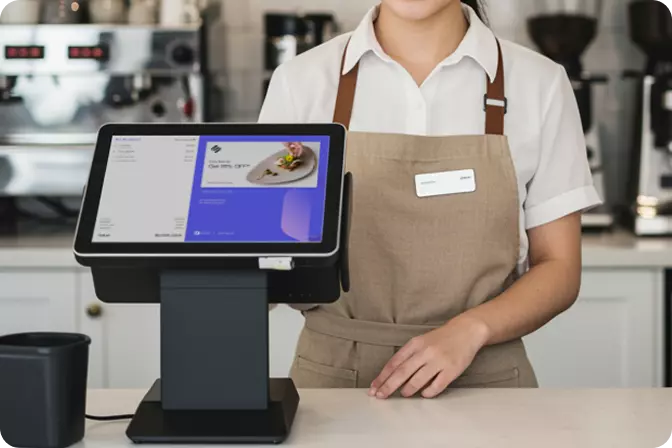


Choosing the best POS software in Indonesia is no longer simply about finding the cheapest cashier application. Today, Point of Sale (POS) software serves as the operational hub of a business, handling transactions, managing inventory, accepting QRIS payments, and providing customer data to support loyalty programmes.
However, the market offers a wide range of options, each designed to serve different business segments. This guide compares 10 widely used POS software solutions in Indonesia, covering their selection criteria, estimated pricing, and potential limitations.
POS software is a system that manages the sales process at the point of transaction. Unlike conventional cash registers that simply record payment amounts, modern POS software connects cashier operations with inventory management, sales reporting, digital payments, and customer data.
Its core functions typically include:
Several official statistics highlight the rapid growth of Indonesia's digital payment ecosystem:
However, a study by Perbanas indicates that 80% of MSMEs remain informal, with digitalisation primarily being used to accept payments. This suggests considerable room for further POS adoption in inventory management, sales reporting, and customer management.
With millions of merchants already accepting QRIS payments, the next step is to adopt systems that automatically connect these transactions with inventory records and sales reports. This is where POS software becomes particularly valuable.
Before subscribing to a POS solution, consider the following six criteria.
Make sure QRIS and e-wallet payments are included in your selected subscription plan rather than being available exclusively in premium packages. Some providers restrict certain payment features to specific subscription tiers.
Internet connectivity varies across different regions. POS software that can continue recording transactions without an internet connection and automatically synchronise data once connectivity is restored helps prevent queues from stalling during network disruptions.
If your business operates more than one outlet, check whether the dashboard consolidates reports from all branches and whether subscription fees are calculated per outlet.
A POS system integrated with Customer Relationship Management (CRM) software enables automatic point allocation, customer segmentation, and campaigns based on purchasing behaviour. Without integration, cashier transaction data and customer information remain stored separately.
An intuitive interface makes cashier training faster and easier. Meanwhile, Indonesian-language customer support can save valuable time when technical issues arise.
Subscription fees are not the only expenses to consider. Factor in hardware costs, such as tablets, receipt printers, and cash drawers, as well as per-outlet charges and additional subscription fees.
Different businesses have different operational requirements. Consider the following recommendations:
The following list is organised by business segment rather than an absolute ranking, as the best POS software ultimately depends on your specific business requirements. Prices are indicative and subject to change.
OmniPOS is a POS software solution developed by Omni to improve F&B operational efficiency. It operates within the Stamps CRM ecosystem, with its primary competitive advantage being its direct integration with customer loyalty programmes.
Established in 2014, Moka POS is one of the most recognised POS platforms in Indonesia, serving both retail and food service businesses. Its cloud-based system also supports offline transaction recording.
Operating since 2013, Pawoon is a cloud-based POS solution designed for F&B and retail businesses. Its interface is built to simplify transaction workflows, helping businesses reduce queues and improve cashier efficiency.
Founded in 2014, Kasir Pintar has been adopted by more than one million business owners. It provides an affordable entry point for businesses transitioning from manual transaction recording, offering a free plan with no time restrictions.
iReap offers iReap POS Lite, a free Android application that supports offline functionality, alongside its paid Pro version. The software is widely used by retail stores, minimarkets, grocery shops, and wholesale businesses.
Founded in 2015, Olsera is popular among FMCG and F&B businesses. Its hybrid technology synchronises cloud and offline data, while also providing CRM and employee management capabilities.
Established in 2019, Majoo has been adopted by more than 30,000 MSMEs. Rather than positioning itself solely as a cashier application, the platform offers an integrated business management solution.
Jubelio POS focuses on omnichannel retail operations, offering BOPIS/BORIS capabilities (Buy Online, Pick Up In Store / Buy Online, Return In Store) alongside sales reporting features. The system can also operate in offline mode.
HashMicro POS is a cloud-based solution designed for retail, restaurant, and F&B businesses. It connects with ERP modules to manage transactions, inventory, and daily operations. According to the provider, the platform is suitable for businesses ranging from growing MSMEs to enterprises operating multiple branches.
Accurate POS is part of the Accurate accounting software ecosystem, making it relevant for businesses looking to integrate cashier operations with their accounting processes. Several reviews have also included it among recommended cashier applications for comprehensive business management.
Hardware expenses, per-outlet charges, and additional subscription packages can make the total cost significantly higher than initially expected.
Internet disruptions during peak business hours can bring queues to a standstill if the POS system cannot operate without an internet connection.
A free trial or product demonstration can reveal whether the cashier workflow suits your business much faster than simply reviewing a list of features.
Without CRM integration, businesses miss opportunities to understand purchasing patterns and develop more targeted loyalty programmes.
Bank Indonesia has identified the expansion of QRIS Tap as one of its key priorities for 2026. Launched in March 2025, the technology now supports both tap-in and tap-out transactions. POS software providers must therefore be prepared to accommodate emerging payment methods.
Business owners increasingly view transaction data as a foundation for customer retention strategies. Automatic point allocation, customer segmentation, and behaviour-based marketing campaigns are becoming standard expectations rather than optional features.
In the F&B sector, self-service ordering kiosks are increasingly being adopted to reduce queues and minimise staff workloads. These kiosks work most effectively when connected to the same POS system and customer database.
The best POS software in Indonesia is not necessarily the most expensive or widely recognised product. Instead, it is the one that aligns with your business type, number of outlets, and growth objectives. Start by identifying your operational requirements, comparing the total cost of ownership, and testing two to three shortlisted solutions before making a decision.
For F&B businesses looking to align cashier operations with customer retention strategies, OmniPOS is worth considering. The software offers fast and accurate transaction processing, reliable offline functionality, streamlined inventory and menu management, and real-time multi-outlet dashboards, helping businesses maintain smooth daily operations as their outlet networks expand.
What sets OmniPOS apart is its integration with Stamps CRM and Loyalty. Loyalty points are automatically awarded after each transaction, members can be scanned directly through the POS or kiosk, customer segmentation is updated in real time, and marketing campaigns can be triggered automatically based on customer behaviour.
Looking to improve your F&B operations and drive sustainable business growth? Contact the OMNI team today for a consultation and discover a POS solution tailored to your business needs.

 EN
 ID