

Editor: Anggit Sapta

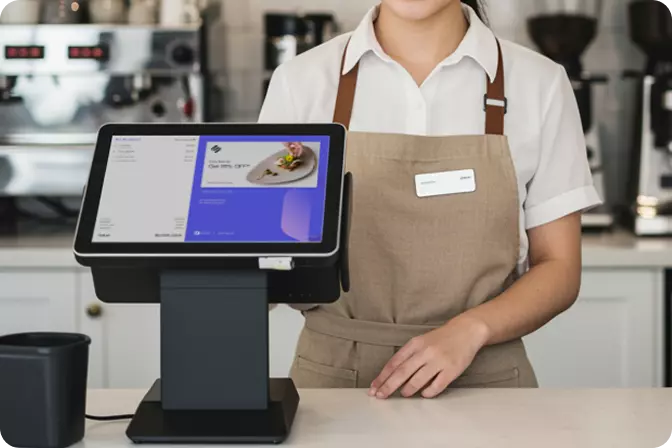
A POS application, or Point of Sale (POS) system, is digital software used to manage sales transactions, inventory, business reporting, retail or service operations, and payment integration within one centralized digital system.
Unlike conventional cash registers that only record sales, modern cloud-based POS applications offer a complete ecosystem to run businesses more efficiently and allow owners to access data from anywhere through:
According to data from Indonesia’s Ministry of Cooperatives and SMEs (2024), more than 64 million MSMEs in Indonesia have begun digital transformation, with POS adoption increasing 78% since 2022.
This transformation is not merely a trend—it is a strategic necessity to remain competitive in an increasingly demanding business landscape.
As consumer behavior shifts toward cashless and online transactions, POS applications provide the main solution to:
Without a digital POS system, businesses risk falling behind in a fast, data-driven economy.
Related Article: POS App: A Smart Solution for Your Business Growth
Implementing a POS system has been shown to improve operational efficiency by up to 60% compared to manual systems.
Transactions that previously took 3-5 minutes per customer can now be completed in just 30-60 seconds, critical during peak hours when customer satisfaction is determined.
A study by the Indonesian Retail Association (2025) found that businesses adopting POS systems reduced customer waiting time by 45%, contributing to a 32% increase in customer satisfaction scores.
With 96% of Indonesians using e-wallets, businesses must adopt systems capable of accepting modern payment methods such as QR payments, instant transfers, and digital wallets.
The Southeast Asian POS market is dominated by mobile and portable systems, accounting for 46% of market share in 2025, indicating a shift toward tablet- and smartphone-based POS solutions. Indonesia alone contributes nearly 29.5% of the regional market, with continued growth projected through 2031.
Manual calculation errors average 8-12% in daily transactions, which can lead to significant financial losses.
POS systems eliminate human error through automation, recording every transaction with 99.9% accuracy.
Error Rate Comparison:
Inventory management is the biggest challenge for 73% of retail business owners in Indonesia.
Modern POS systems feature real-time inventory tracking with automatic notifications when stock reaches minimum levels, preventing stockouts that can harm sales.
They also analyze sales patterns to recommend purchasing decisions, helping businesses optimize working capital and reduce dead stock by up to 40%.
This eliminates:
POS applications automatically generate comprehensive financial reports. Business owners can instantly identify:
These insights are accessible anytime via user-friendly dashboards and can integrate with Indonesia’s tax systems, simplifying reporting and compliance with the Directorate General of Taxes (DJP).
POS applications are relevant across nearly all industries:
A good POS should require minimal training. An intuitive interface reduces employee learning curves from two weeks to just 1-2 days, lowering training costs and accelerating productivity.
Key interface elements include:
A comprehensive inventory feature should include:
This reduces stock-taking time from 6-8 hours to just 1-2 hours for outlets with 500+ SKUs.
Indonesian consumers increasingly prefer diverse payment options. Bank Indonesia (2025) reports:
Modern POS systems must support:
Analytics dashboards should provide insights such as:
Data is securely stored in the cloud and accessible anytime, anywhere.
|
Aspect |
Offline POS |
Online (Cloud-Based) POS |
|
Data Accessibility |
Local device only |
Accessible anywhere |
|
Data Backup |
Manual, high risk |
Automatic cloud backup |
|
Initial Cost |
Higher (license model) |
Lower (subscription) |
|
Scalability |
Limited |
Easily scalable |
|
Multi-Branch |
Hard to synchronize |
Real-time synchronization |
|
Data Security |
Hardware risk |
Encrypted & backed up |
|
Payment Integration |
Limited |
Digital & cashless ready |
|
Monitoring |
On-site only |
Remote monitoring |
Recommendation: For modern businesses planning to expand, cloud-based POS systems offer greater flexibility and long-term cost efficiency.
Use this checklist:
Key trends indicate:
Digital POS systems will soon become the standard, not a differentiator.
A modern POS system is no longer just a replacement for traditional cash registers, it is a strategic foundation for building business operations that are digital, measurable, and ready to scale. OMNI POS delivers a technology-driven point-of-sale solution with over 18.7 million active users and is trusted by multinational brands across Asia.
Designed for both enterprise organizations and growing SMEs, the system is stable, intuitive, and fully integrated into the F&B and retail ecosystem, including:
With the right deployment and a well-planned implementation strategy, a robust POS system becomes a true game changer, driving higher profitability, improving operational efficiency, and delivering a seamless customer experience at scale.