
Cashier app pricing in Indonesia ranges from Rp0 (free) to over Rp500,000 per month. However, those figures mean very little without one critical question: how much can you save or generate after using it? This guide helps you estimate your potential return on investment before committing to a decision.
Most articles on cashier app pricing jump straight to comparison tables. Understandable but they tend to skip the more important question. The right question is not "How much does it cost?" but rather "How much can I get back?"
Consider paying Rp200,000 per month for a cashier app. If that app helps you cut one hour of daily manual reconciliation, reduce stock losses from unmonitored inventory, and drive repeat purchases through automated promotional notifications then Rp200,000 could well be your most financially sound decision of the month.
On the other hand, paying Rp99,000 for an app you barely use is still money down the drain. That is precisely where this conversation begins.
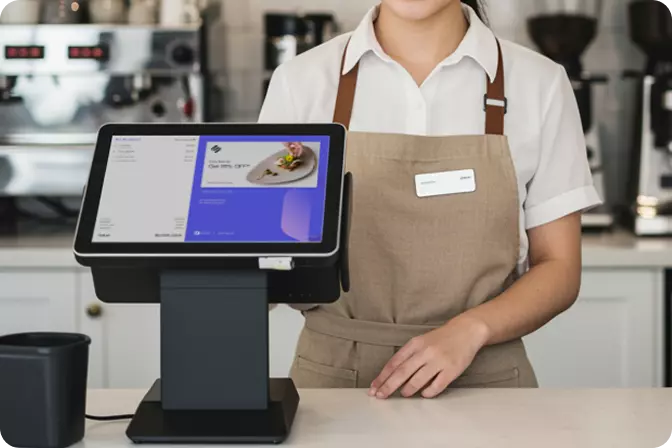
A cashier app, or Point of Sale (POS) application, is software that manages sales transactions digitally. It replaces conventional cash registers while simultaneously recording inventory data, sales reports, and employee management within a single platform.
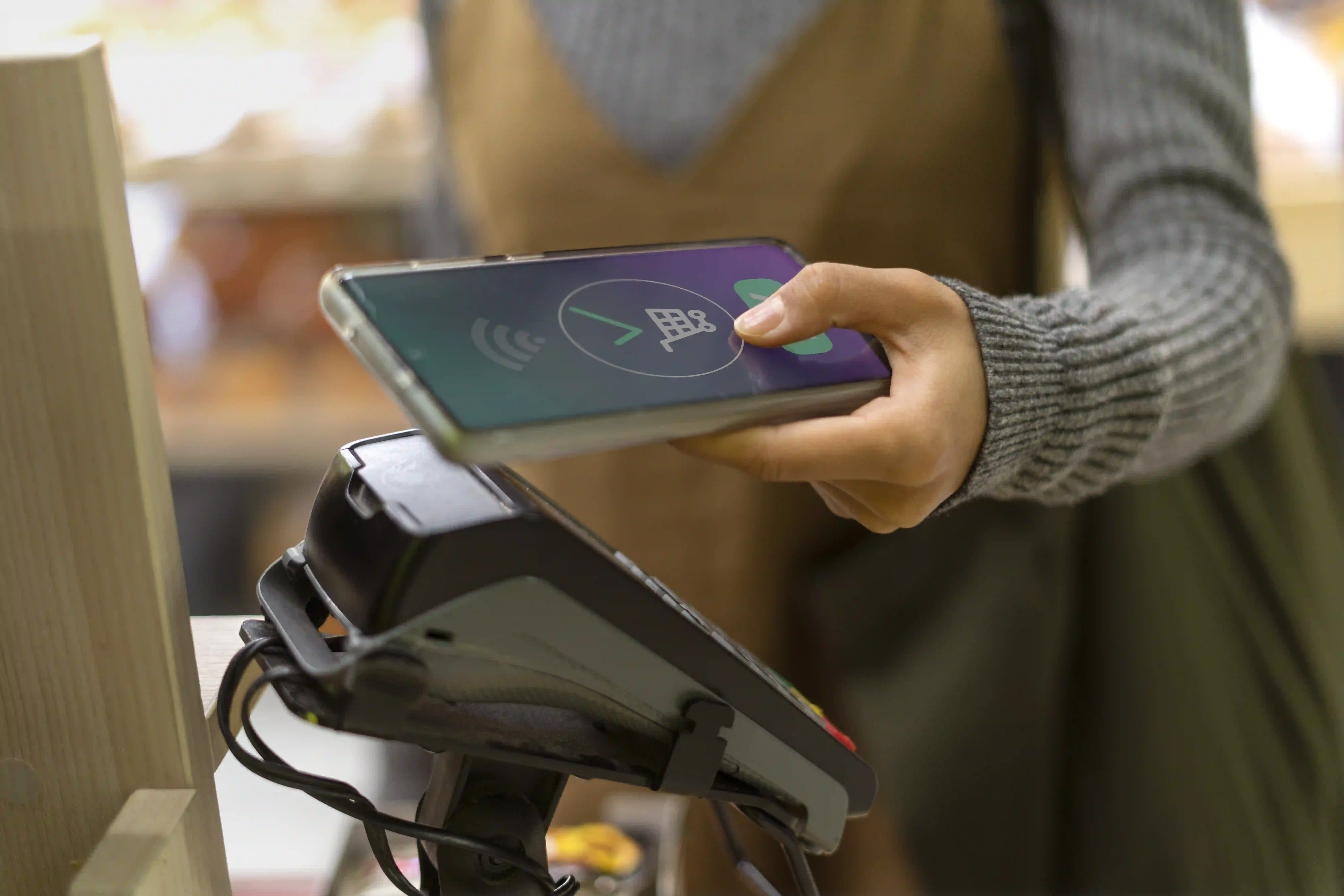
What business owners frequently overlook is that the greatest value of a cashier app lies not in the transactions it processes, but in the data it generates every single day.
Each time a cashier processes a sale, the system records which products were sold, peak sales hours, the most frequent customers, and items running low on stock. When properly utilised, this data can be directly translated into more profitable business decisions.
According to the Digital MSME Landscape report by Google and Temasek, more than 70% of digitally active SMEs in Southeast Asia including Indonesia already use or plan to adopt cloud-based POS systems within the next three years. One of the primary drivers is measurable operational efficiency, not merely the convenience of processing payments.
Before looking at pricing, it is worth understanding where the return on your investment originates.
Operational time savings
Manual sales reconciliation that typically takes one to two hours per day can be automated in minutes. For businesses with multiple staff members, this frees up working hours for more productive tasks.
Reduced stock losses
A cashier app with automated inventory management helps you detect low stock before running out, prevent over-purchasing, and minimise product waste from unmonitored expiry. For F&B businesses in particular, the savings from this feature alone can far exceed the cost of the monthly subscription.
Higher repeat purchase rates
A cashier app integrated with a loyalty programme or CRM can automatically send promotions to lapsed customers, record purchase preferences, and drive repeat transactions without manual effort. According to research by Bain & Company, a mere 5% improvement in customer retention can increase profitability by 25 to 95%.
Faster, more accurate decision-making
Real-time sales reports allow you to immediately identify which menu items or products to promote and which to discontinue without waiting until the end of the month.
Free Cashier Apps
Best suited for small stalls, independent retailers, or businesses just beginning to build a digital record-keeping system. The primary ROI comes from time saved on reconciliation and reduced cash discrepancies through more organised recording. Examples in Indonesia include iReap POS, BukuKas, and select lite packages from Moka POS. That said, limitations apply — typically restricted to a single outlet, limited reporting, and no integrations. Free cashier apps of this kind are generally used for trial or demonstration purposes only.
Mid-Range Cashier Apps (Rp100,000–Rp300,000/month)
At this price point, the ROI becomes considerably more tangible. You gain automated inventory management, category-level reporting, digital payment integration (QRIS, card), and more responsive customer support. For small-to-medium cafés or restaurants, businesses that were previously losing 3–5% of revenue due to stock discrepancies or pricing errors can see immediate efficiency gains. Players such as Omni, Majoo, Pawoon, and Kasir Pintar are prominent in this segment.
Premium and Enterprise Cashier Apps (Rp300,000–Rp1,000,000+/month)
At this level, ROI is derived from a broader ecosystem: multi-outlet management, CRM and loyalty programme integration, advanced analytics, open APIs for connecting to accounting systems or ERPs, and dedicated support. For restaurant chains or multi-branch retailers, the efficiency gains from centralised data management alone can be equivalent to the cost of one full-time administrative staff member.
A Two-Outlet Café in Jakarta
Initially using a free app, the owner struggled to consolidate reports from both outlets simultaneously. After switching to a paid plan at approximately Rp200,000 per month, what previously took two to three hours of manual work was completed automatically in 15 minutes. The subscription cost was effectively covered by time savings alone before accounting for stock efficiency gains and reduced input errors.
A Quick Service Restaurant Franchise The business required an app connected to its customer loyalty system and capable of reporting to head office. After adopting an enterprise solution at a higher price point, the ROI was realised within the first six months, driven by significant operational improvements and a measurable increase in repeat customers following the activation of the loyalty programme.
1. Audit your current operational losses. How many hours per week are spent on manual reconciliation? What percentage of stock goes to waste? How many customers have not returned due to the absence of a loyalty programme? These figures form the basis of your ROI calculation.
2. Use the trial period for validation, not just exploration. Nearly all apps offer a 7 to 30-day trial. Use this window to genuinely measure the impact — not simply to browse through the features.
3. Calculate the total cost of ownership. Some apps charge additional fees for payment integrations, staff training, or transaction volumes above a certain threshold. Compare the full annual cost, not just the monthly subscription.
4. Choose a solution that can scale with your business. An affordable app today may become costly tomorrow if you need to migrate as your business grows. Data migration and staff retraining carry hidden costs that are frequently underestimated.
The Indonesian cashier app market is moving in two directions simultaneously more affordable at the entry level, and more value-rich at the top end.
Intense competition has driven the cost of basic features down, or made them free entirely. Yet businesses that are serious about growth are increasingly willing to pay a premium for analytics capabilities, CRM integration, and loyalty management tools that were previously only available in enterprise-grade solutions.
According to Statista, the global POS software market is projected to grow from USD 12 billion in 2023 to over USD 24 billion by 2030. Indonesia, as one of Southeast Asia's largest digital markets, is a significant contributor to that growth driven by the widespread adoption of QRIS and rising digital literacy among SMEs.
If your business is still small and you are building your first digital system, start with a free option or something under Rp150,000 per month focus on the basics of organised record-keeping.
If you already operate more than one outlet, run a membership programme, or require management-level reporting, a range of Rp200,000–Rp500,000 per month is a sound investment provided you make full use of the features available.
If you manage a chain or franchise with multiple outlets and thousands of daily transactions, an enterprise solution with custom pricing is not an expense it is business infrastructure.
Cashier app pricing is not about the number on your monthly invoice. It is about how much you can save, streamline, and generate after putting it to work. Calculate your potential ROI first then compare the prices.

 EN
EN
 ID
ID