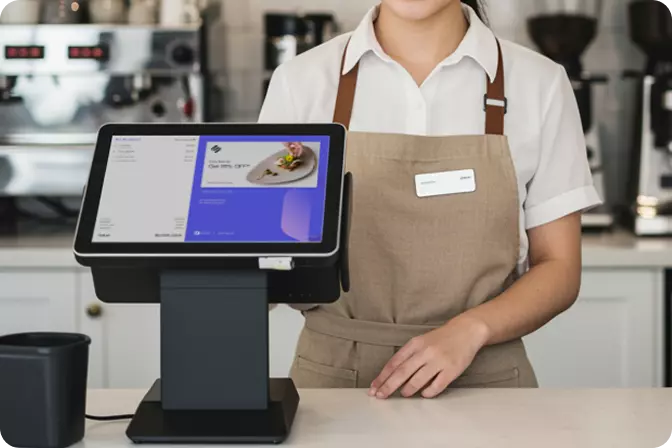

A restaurant POS application is a digital point-of-sale system that manages orders, payments, inventory, and sales reports on a single platform. For restaurant owners and managers, this tool is far more than a cash register; it serves as a "command centre" for monitoring the health of the business in real time. This article explores its definition, how it works, the different types available, its core features, the business benefits it delivers, and practical tips for choosing the option best suited to the scale of your operation.
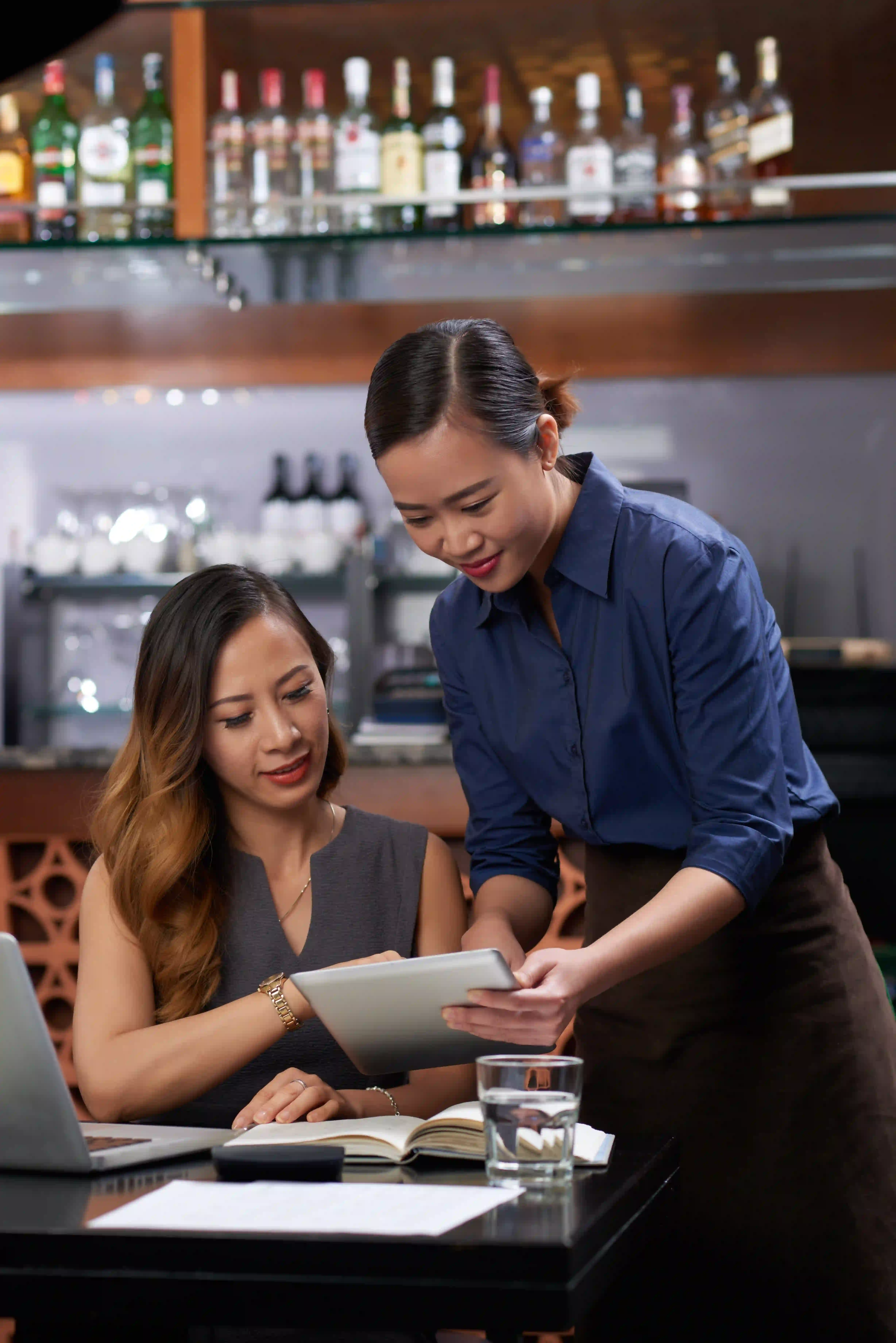
POS stands for "point of sale." Put simply, a restaurant POS application is software that replaces the traditional cash register with a far more intelligent system. It records every transaction, manages the menu, tracks the supply of raw ingredients, and presents sales reports that you can review even from your phone.
Think of the POS as the kitchen and the cashier's counter finally speaking the same language. When a customer places an order, that order flows straight to the kitchen, is calculated automatically on the bill, and is recorded in the financial reports. There are no more lost order slips or miscalculations at the end of the day.
For a manager, the real value lies not in the "cash register" itself but in the visibility it provides. You gain a clear picture of which dishes sell best, when the restaurant is busiest, and what the profit margin is on each item, all without having to crunch the numbers manually late into the night.
The workflow is intuitive. When a customer orders, a server enters the request through a tablet or POS device. The order is then forwarded directly to the kitchen via a kitchen display system or kitchen printer. Once the food is ready, the cashier processes the payment, whether in cash, by card, or through a digital wallet such as QRIS.
Behind the scenes, every transaction automatically updates the inventory data and the sales reports. If raw ingredients are running low, the system can issue an alert. All of this data is stored in the cloud, so you can access it from anywhere, whether you are at head office or away on holiday.
This is where the real shift occurs: from simply recording transactions to genuinely understanding the business.
Not all POS systems are created equal. Broadly speaking, there are three categories worth knowing.
A cloud-based POS stores data on the internet, making it accessible from any device. This option suits businesses that want flexibility and operate more than one branch.
A local (on-premise) POS stores data on a physical device at the restaurant itself. It is less common today but remains relevant for businesses where the internet connection is unreliable.
A hybrid POS combines the two. The system continues to function when the internet goes down and then synchronises the data once the connection is restored. This is a safe choice for many restaurants in Indonesia, given the variable quality of network coverage.
Why are so many restaurants making the move to digital systems? Because the benefits are felt directly on the bottom line.
First, operational efficiency. Tasks that once consumed considerable time, such as closing the books at the end of the day, are now completed within minutes. Second, fewer human errors. Incorrect orders and cash leakage are reduced dramatically because everything is recorded automatically.
Third, and most valuable of all, data-driven decision-making. You can identify which items deserve promotion, which should be removed from the menu, and when the best time is to bring on additional staff. Decisions are no longer based on instinct but on solid figures.
Indonesia's culinary landscape is remarkably diverse, and POS systems now feature across almost every segment. A fast-food chain may use one to standardise operations across dozens of outlets while monitoring sales from a single central dashboard. A small café in Jakarta might rely on it to integrate QRIS and GoFood orders on one screen.
Full-service restaurants, such as family-dining chains, use a POS to manage reservations, optimise table turnover, and analyse their most profitable dishes. Even laundry outlets and clinics adopt similar systems, demonstrating just how flexible this technology is across industries.
In the Indonesian market, several types of provider exist. There are international platforms offering rich features but at a higher cost, local providers who understand the specific needs around QRIS and domestic delivery integration, and integrated solutions that combine the POS with CRM and loyalty programmes.
The key to making a comparison is not which option is "the most complete," but which is "the best fit for the scale and model of your business." A system that is overly sophisticated for a small eatery will simply become a cost burden, while one that is too basic will hold back a restaurant that is growing rapidly.
Before making a commitment, there are several factors worth considering. Make sure the system is easy for your staff to use, because even the most powerful technology is pointless if your team struggles to operate it. Check whether it can continue running when the internet is down. Consider how well it integrates with the services you already use, and confirm that the provider offers responsive technical support.
Finally, think about growth. Choose a system that can scale alongside your business, from a single outlet to multiple branches, without forcing you to switch platforms midway.
The momentum in this sector is hard to ignore. Indonesia's food-service industry is projected to grow by around 13% annually between 2025 and 2030, one of the highest rates in the world. Its market size in 2025 is estimated to reach approximately USD 62.40 billion, reinforcing Indonesia's position as one of the largest F&B markets in Southeast Asia.
This trend is being driven by the dominance of delivery services and app-based ordering, alongside the growing adoption of artificial intelligence for menu personalisation and customer analytics. Restaurants without an adequate digital system risk falling behind competitors that are already using data to inform their decisions.
Do small restaurants really need a POS application?
Yes. Even small businesses benefit from automated record-keeping and sales reporting. In fact, at a smaller scale, a single instance of cash leakage or a miscalculation can have a significant impact.
How long does it take to adapt to the system?
Most modern systems are designed to be intuitive. With brief training, staff are generally up to speed within a few days.
Is a POS system reliable when the internet connection fails?
A hybrid system continues to operate offline and synchronises the data automatically once the connection returns, so operations are never disrupted.
What sets a good POS apart from a mediocre one?
It is not the number of features, but how effectively the system turns raw data into insights you can use to make better decisions.
The restaurant POS application has evolved from a simple cash register into the command centre of the culinary business. For those who own or manage a restaurant, the right system means greater operational efficiency, fewer errors, and smarter decisions grounded in real data.
Amid the rapid growth of Indonesia's F&B industry, the question is no longer whether you need a POS system, but how quickly you can put it to work to gain an edge over your competitors. Choose the one that fits your scale and your needs, and let technology drive the growth of your business.

 EN
EN
 ID
ID