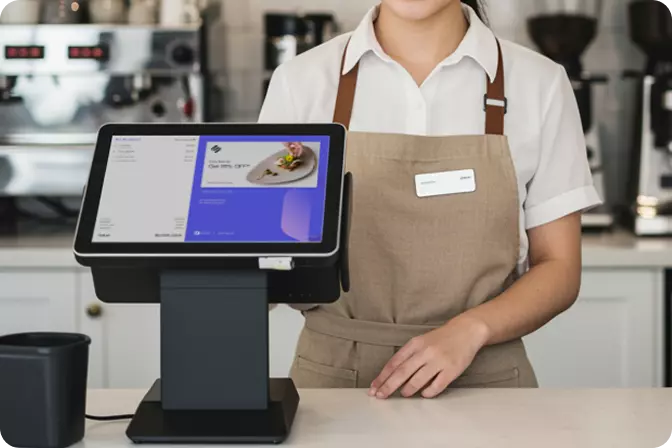


Modern businesses no longer operate through a single sales channel. Today, customers can move from social media to marketplaces and continue transactions in physical stores or official websites within a very short time. At the same time, businesses must manage multiple operational activities simultaneously, including transactions, inventory, payments, and customer data.
The challenge is that many companies still use separate systems for each of these needs. As a result, operations become unsynchronized, monitoring becomes more difficult, and decision-making is often delayed because data is scattered across multiple platforms. In situations like this, omnichannel software is becoming increasingly relevant because it helps businesses connect various operations within one integrated system.
Omnichannel software is a system designed to integrate multiple business channels and operations into one centralized platform.
This software usually connects:
The goal is not only to simplify operations, but also to create more consistent customer experiences.
The growth of digital business has made operations increasingly complex.
Today, businesses must be able to:
Without integrated systems, many processes remain manual and time-consuming.
As a result:
This is why more businesses are adopting omnichannel software to simplify operations.
When implementation runs effectively, improvements are usually seen in the following areas:
1. More Efficient Operations
Many manual processes are reduced because data across channels becomes automatically connected.
2. More Centralized Data
Sales, inventory, and customer information can be monitored within one dashboard.
3. More Consistent Customer Experiences
Customers receive smoother experiences across different channels.
4. Easier Business Monitoring
Business owners can monitor operational performance in real time.
Many businesses grow faster than the readiness of their operational systems.
As a result:
The more separate tools a business uses, the greater the risk of fragmented operations.
There is still a perception that omnichannel software is only suitable for large corporations.
In reality:
This means omnichannel software is relevant for businesses of various sizes that want to operate more efficiently.
All operations can be monitored within one interface.
Inventory changes automatically synchronize across channels.
Marketplaces, POS systems, and digital platforms can connect within one system.
Transaction history and customer data become easier to analyze.
Business reports are generated automatically without manual processes.
|
Aspect |
Separate System |
Omnicannel Software |
|
Business data |
Scattered |
Centralized |
|
Operational synchronization |
Manual |
Automated |
|
Business monitoring |
Difficult |
Real-time |
|
Customer experience |
Inconsistent |
More seamless |
|
Operational efficiency |
Lower |
More optimized |
Businesses are connecting online and offline operations into one ecosystem.
Customer data is becoming a valuable business asset.
Businesses are reducing manual processes through system automation.
Companies are increasingly seeking all-in-one platforms for simpler operations.
The larger business operations become, the harder it is to manage everything manually or through disconnected systems.
At this stage, many businesses begin looking for software that helps:
Today, various omnichannel software solutions are available in Indonesia, one of which is OMNI POS. With an integrated approach, systems like this help businesses operate more efficiently, systematically, and with easier management across multiple channels within one platform. It’s time to build more connected business operations with OMNI POS!

 EN
EN
 ID
ID