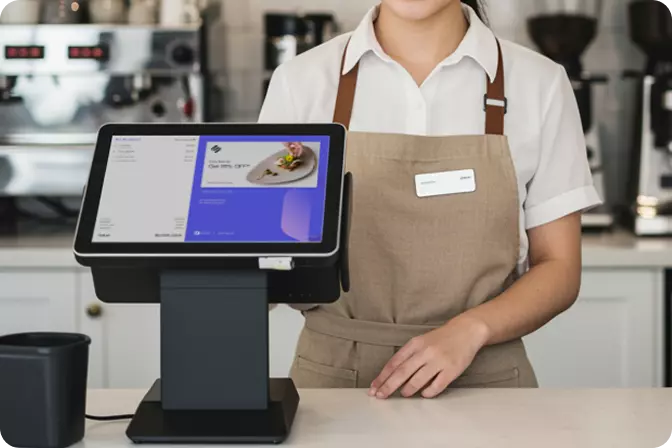

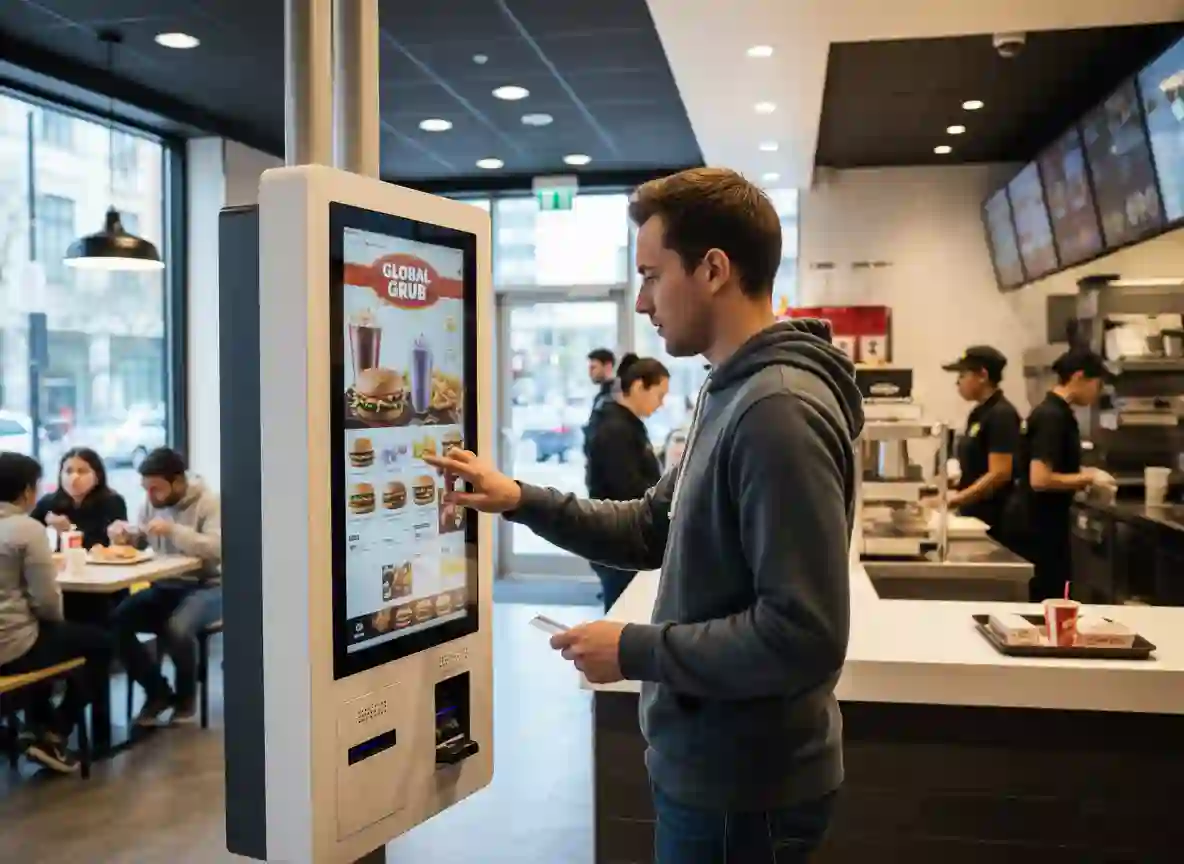
 A kiosk is a self-service device that allows customers to place orders, make payments, and access services without staff assistance. In Indonesia, kiosks have been adopted most widely by the F&B industry, from quick-service restaurants to coffee chains, as a way to shorten queues, increase transaction value, and reduce operational costs. This article covers how kiosks work, their types, business benefits, real examples in Indonesia, and practical tips for choosing the right kiosk for your business.
A kiosk is a touchscreen self-service terminal that enables customers to complete transactions on their own, from selecting menu items and making payments to printing receipts, without direct interaction with staff. In the context of modern Indonesian business, a kiosk is no longer simply a small trading stall. It is a digital device that serves as an extension of your operations team.
The F&B industry has become the largest adopter because its business characteristics align closely with what kiosks do best: high transaction volume, intense peak hours, menus with many variants, and margins that are sensitive to labour costs. For business owners, the simplest way to think about it is this: a kiosk is an additional cashier that requires no monthly salary, never tires during rush hour, and delivers the same sales script consistently, every single time.
Without getting overly technical, the workflow is straightforward and makes clear business sense:
The fourth point is the one most often overlooked. A kiosk is not merely a transaction tool. It is also a customer data collection point, and that data is the fuel for your loyalty and marketing strategy.
Not all kiosks are created equal. Below are the types most relevant to businesses in Indonesia:
For retail and F&B business owners, the first two types typically deliver the fastest impact on revenue and efficiency.
When evaluating a kiosk, assess these features not from a technology standpoint but in terms of business impact:
Why are global and local business leaders investing seriously in kiosks? The data is compelling. Globally, the self-service kiosk market was valued at approximately USD 28.39 billion in 2025 and is projected to reach USD 41.74 billion by 2029, growing at a CAGR of 10.1%. Double-digit growth signals one thing clearly: self-service adoption is not a passing trend but the direction of the industry.
The most frequently cited case study is McDonald's, which recorded a 6% increase in sales within the first year of deploying self-service kiosks, with average transaction value rising 30% thanks to automated upselling. Imagine a similar impact on your business: a larger average basket without adding a single member of staff.
At the operational level, the benefits can be summarised in four points:
Kiosk adoption in Indonesia is most visible in the quick-service F&B sector. Local research published in Jurnal Pendidikan Indonesia (2025) found that urban consumers use self-service kiosks frequently at fast-food restaurants, and that satisfaction with the service influences customer loyalty. In other words, a well-designed kiosk is not just an efficiency tool. It shapes an experience that brings customers back.
Several real-world scenarios already in motion across Indonesia include:
Broadly speaking, there are three approaches available in the Indonesian market:
|
Approach |
Strengths |
Considerations |
|
Bundled kiosks from POS vendors (hardware and software in one package) |
Quick to deploy, single point of support |
Flexibility limited to the vendor's ecosystem |
|
Kiosk software on your own tablets or devices |
Low upfront investment, flexiblel |
Device durability and a less premium look |
|
Kiosks integrated with a CRM/loyalty platform |
Connected customer data, supports long-term retention strategy |
Requires a team ready to act on the data |
For businesses with multiple outlets and a focus on repeat customers, the third approach usually delivers the greatest long-term value, because the kiosk stops being a mere cash register and becomes a customer data collection point.
Kiosks in Indonesia have shifted from "impressive technology" to a sound business decision, and the F&B industry proved it first: shorter queues, higher transaction values through consistent upselling, fewer order errors, and every transaction converted into valuable customer data. With a global market growing at double digits and Indonesia's urban consumers increasingly comfortable with self-service transactions, the question is no longer whether your business needs a kiosk, but when and with what strategy you will adopt one.
Start with your biggest operational pain point, choose a solution that integrates with your loyalty and POS systems, and then measure the impact. The best kiosk is not the most sophisticated one. It is the one most closely aligned with your customer journey.

 EN
EN
 ID
ID