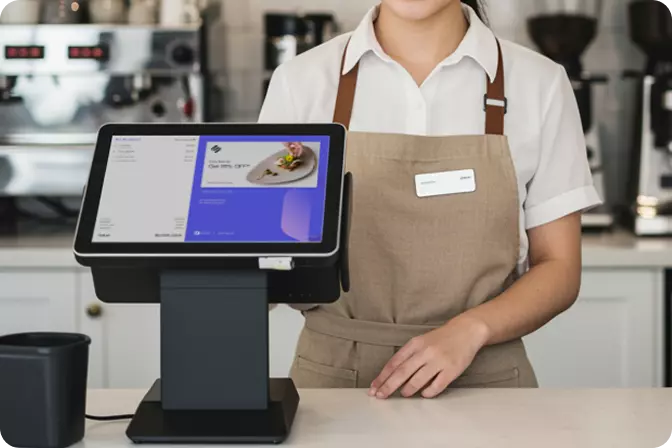

There's a question that rarely gets asked when a business decides to install a kiosk: what exactly is being bought, the hardware or the system?
The answer determines everything. A kiosk without the right software is just an expensive touchscreen standing in the corner of a room. But a kiosk with well-integrated software is an operational touchpoint where every transaction moves data across the entire business system simultaneously.
This is why choosing kiosk software is far more strategic than choosing the size of the screen.
Kiosk software is the system that runs all the functions of an interactive kiosk, both from the customer's side and the business side. On the surface, customers see a simple and intuitive ordering interface. Behind it, the software manages the menu catalog, processes payments across multiple methods, sends orders to the kitchen, updates stock, and records all transaction data to the central system.
What sets good kiosk software apart from software that merely functions is its depth. A good system doesn't just process transactions. It generates data that can actually be used: which products are ordered most frequently at certain hours, which menu combinations are most popular, and what purchasing patterns emerge on busy days.
OMNI Kiosk builds all of this logic from within its own system, not as an add-on feature installed later.
Many businesses fall into the trap of making kiosk purchasing decisions that focus on physical specifications: screen size, bezel thickness, material durability. Those things matter, but they aren't what determines long-term performance.
Software is what determines how quickly transactions are processed, how accurately orders reach the kitchen, and how useful the data collected from thousands of daily transactions actually becomes. A kiosk with premium hardware but standalone software that isn't connected to POS or CRM ultimately just moves the problem from the cashier to the touchscreen without solving the root issue.
OMNI Kiosk is built on the opposite philosophy: the hardware is the medium, but the software and its integrations are the real value the business experiences every day.
Not all kiosk software is designed for the same needs. In general, there are three models that dominate the Indonesian market today.
is the most common in the F&B sector. Customers select their menu, customize their order, and pay on their own. Orders go directly to the kitchen without needing to be re-entered by staff. OMNI Kiosk sits in this category, with the addition of loyalty and CRM integration that few similar systems offer.
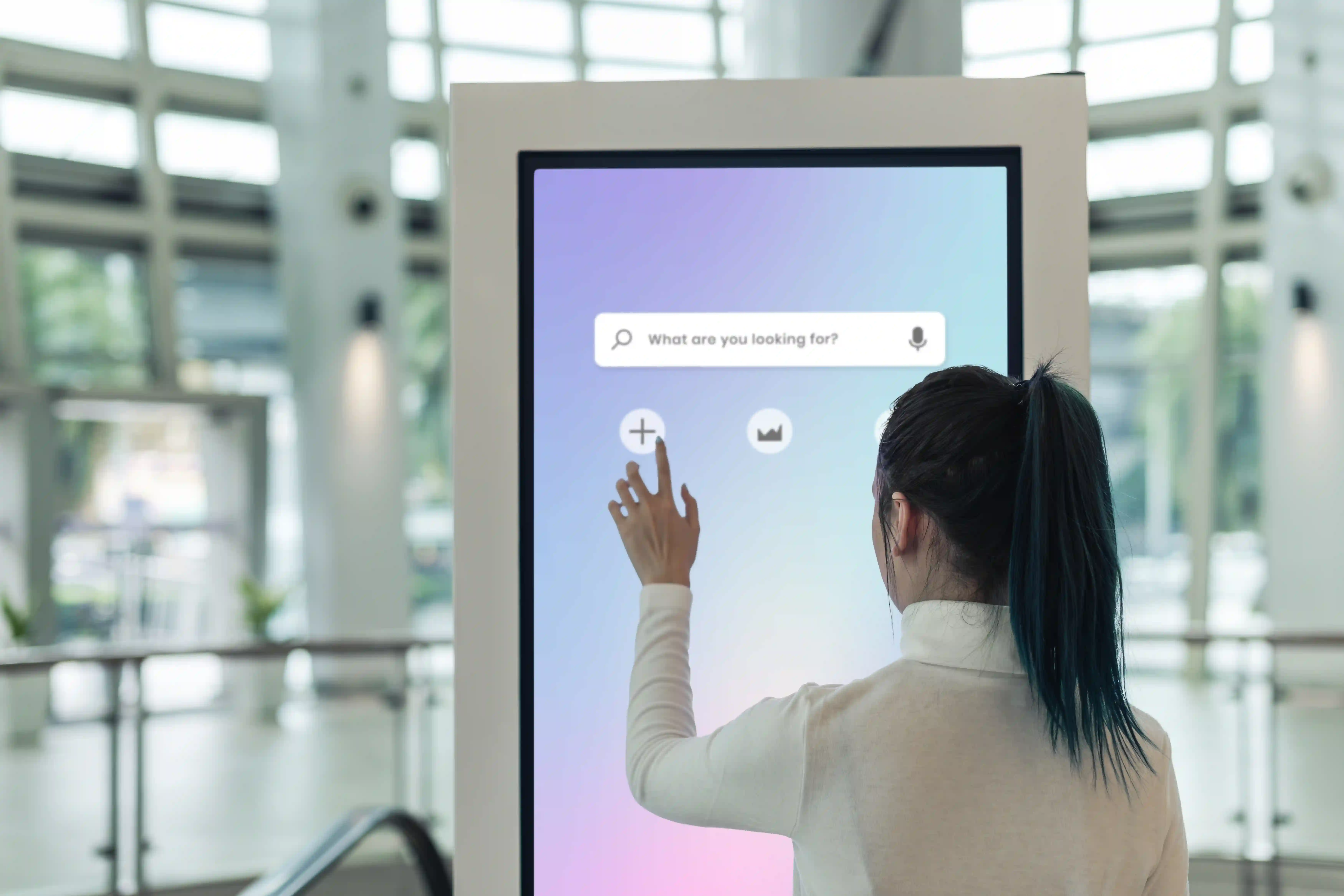
is more commonly used in shopping centers, airports, and public facilities. Its function is to provide location guides, product information, or service schedules independently without requiring staff at every point.
is used in hotels, hospitals, and government services to process attendance, verify identity, or issue queue numbers automatically.
Of these three categories, self-ordering kiosk software has the highest integration complexity because it must connect in real-time to multiple different systems simultaneously.
Evaluating kiosk software from a feature list on a product page is often misleading. What matters more is how those features work together within a single ecosystem.
Real-time POS integration is the basic foundation. Every kiosk transaction must be recorded in the central cashier system immediately, without delay and without manual input from staff. OMNI Kiosk connects directly to OMNI POS, so sales reports always reflect the actual state of the business.
Kitchen Display System connectivity ensures orders from the kiosk reach the kitchen accurately and in the right sequence, rather than being printed on paper that can get lost or misread.
Automatic smart upselling is the feature whose impact is felt most directly on revenue. A good system displays additional menu suggestions based on what the customer has already chosen, not a static list that looks the same for everyone.
Centralized menu management allows price changes, product availability updates, or new item additions to be pushed simultaneously to all kiosks across all locations from a single dashboard, without touching each unit manually.
Certified data security becomes increasingly critical as transaction volume grows. OMNI Kiosk is ISO 27001 certified, equipped with automatic anti-fraud protection and PIN validation for promo redemptions.
The impact of truly integrated kiosk software isn't just felt in transaction speed. Its effects spread across every line of operations.
The kitchen team works from accurate, real-time order data rather than paper that can be misread. The operations team monitors the performance of all kiosks across all outlets from a single dashboard without needing to visit each location. The marketing team gets customer preference data collected naturally from every transaction, without expensive and time-consuming surveys.
Business owners get a fuller and faster picture of what's actually happening at every service point, whenever they need it.
Global market data provides important context for the decision to adopt kiosk software in Indonesia. Mordor Intelligence projects that Asia Pacific will grow at a CAGR of 18.10% through 2030, well above the global average growth of 10.9%. This means businesses in this region, including Indonesia, are currently at the beginning of an adoption curve that will accelerate rapidly over the next few years.
For business decision-makers, this isn't just a number. It's a signal that competitors in the same industry are already evaluating or have already adopted similar systems. The gap between businesses that are integrated and those that aren't will become more pronounced as customer expectations continue to rise.
OMNI Kiosk serves F&B and retail business networks with a base of over 18.7 million active users across Asia, including multinational brands such as Burger King, Tim Hortons, Levi's, and Marugame Udon. That scale isn't just proof of trust. It's assurance that the system has already been tested at a level of operational complexity that far exceeds the average.
Choosing the right kiosk software requires more specific questions than simply comparing prices or feature lists.
First, ask about the depth of its integration. Does this software connect to POS, kitchen, and CRM within one ecosystem, or does it only function as a standalone ordering tool?
Second, evaluate its offline readiness. When the internet connection drops in the middle of peak hours, can transactions still be processed and automatically synced once the network returns?
Third, check the flexibility of its menu management. For businesses with multiple outlets, the ability to update menus or prices centrally and simultaneously is an operational necessity, not a luxury feature.
Fourth, confirm support for local payment methods. QRIS, e-wallets, and debit or credit cards need to be supported natively, not through separate integrations that can add additional points of failure.
Fifth, ask about the responsiveness of its technical support. Kiosk software that fails during the lunch rush is an operational crisis, not just a technical inconvenience.
The right kiosk software isn't the most technically sophisticated one on paper. It's the one that works most seamlessly within your business's operational ecosystem every day. When every kiosk transaction flows automatically to POS, to the kitchen, to reports, and to customer loyalty profiles, your team can focus on what no system can replace: strategic decisions and service quality.
OMNI Kiosk is built for businesses that are ready to ensure every customer service touchpoint works as part of one complete system. If you want to see firsthand how OMNI Kiosk performs at your business's operational scale, a free consultation with the OMNI team is the right first step.

 EN
EN
 ID
ID