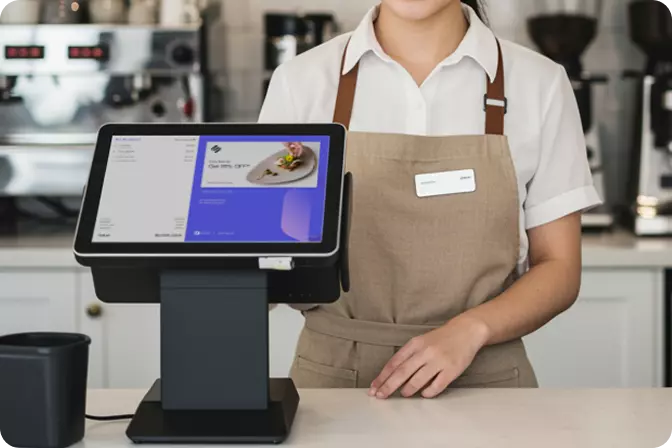


A cafe POS app is a software-based system (often called POS, or Point of Sale) that records transactions, manages raw-material stock, processes digital payments, and generates sales reports automatically and in real time. For business owners, it is no longer an optional add-on but the foundation for decision-making. This article walks through how it works, the features that genuinely matter, the measurable business benefits, and how to choose one without getting trapped by expensive features you will never use.
Picture your cafe during the rush: the queue stretches out the door, one order goes to the kitchen wrong, and at closing time you are still reconciling handwritten register notes against the cash in the drawer. Every one of those moments is a leak of time, of money, and of customer trust.
A cafe POS app exists to seal those leaks. Put simply, it is software that turns a tablet or phone into an operational hub: taking orders, processing payments, deducting raw-material stock automatically, and serving up reports you can read from anywhere.
The urgency is real. Indonesia is now the country with the highest number of coffee shops in the world, at roughly 461,991 locations as of November 2025, ahead of China and the United States. In a market this crowded, differentiation cannot rest on the taste of the coffee alone operational efficiency and service quality decide who survives.
You do not need to understand a single line of code to grasp the logic. The flow goes like this: the cashier selects items on screen, the system instantly routes the order to the kitchen, logs the transaction, and then processes payment cash, QRIS, or e-wallet. At the same time, raw-material stock is reduced automatically and the data is stored in the cloud.
In other words, a single tap at the register triggers several processes at once behind the scenes. As the owner, you simply open the dashboard to see the results. Many modern systems even keep running when the internet goes down, syncing the data the moment the connection returns a crucial feature for cafes in areas with unstable networks.
Not all POS apps are created equal. Broadly speaking, three categories are relevant to decision-makers.
First, cloud-based systems. Data is stored on an online server and can be accessed from anywhere. These suit owners who want to monitor the business remotely and plan to open new branches. This is where the market is heading more than half of small businesses in Indonesia are reportedly beginning to switch to cloud-based POS so they can record transactions and track reports from anywhere.
Second, accounting-integrated systems. Beyond handling the register, transactions flow automatically into the books. This is the ideal choice if you want tidy financial reporting without doubling your workload.
Third, end-to-end F&B ecosystems. These combine the register, table management, kitchen operations, membership, and marketplace integration on a single platform. They fit mature cafes or those built around a multi-channel concept.
Vendors will throw dozens of features at you. As a business leader, focus on the ones that deliver a financial impact:
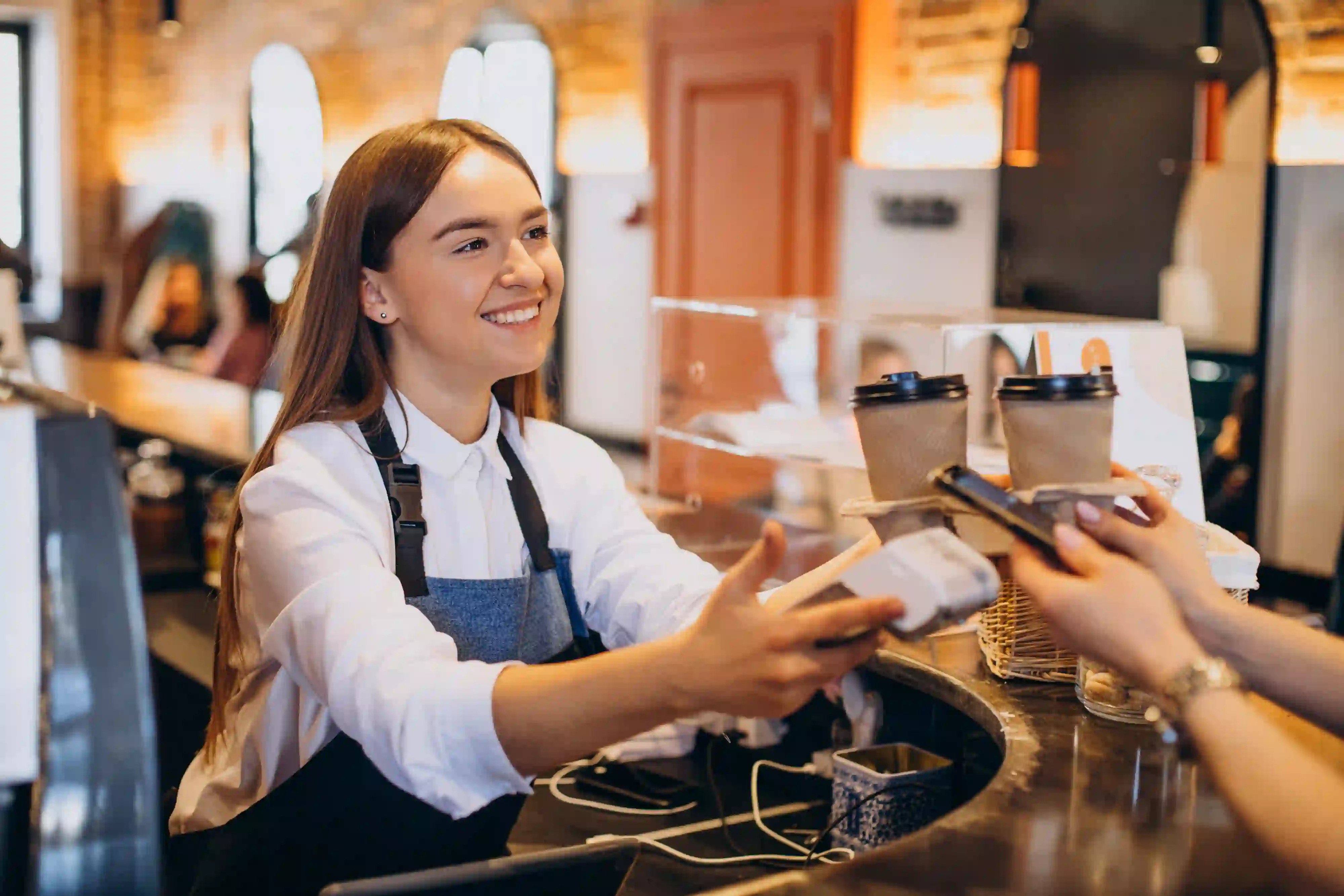
Real-time stock management. The system alerts you when raw materials run low, cutting both the risk of running out and the waste of overstocking. This goes straight to your margin.
Automated sales reports. Daily through monthly, complete with best-selling items and peak hours. This is the raw material for your strategic decisions.
Complete digital payments. Support for QRIS, e-wallets, debit, and credit cards is now a baseline customer expectation, not a luxury.
Multi-outlet management and access control. Run multiple branches from a single account, with different permission levels for cashiers, supervisors, and owners essential for data security.
Loyalty and membership programs. Points and promotions that bring customers back and lift transaction value through automated upselling.
Let us talk results, not features. The right POS app delivers three major advantages.
First, accuracy and speed. Every transaction is recorded automatically, reducing input errors during busy periods and shortening the queue.
Second, full visibility. You can monitor business performance in real time from your smartphone, keeping control even when you are away from the premises. For management and the board, this means decisions grounded in numbers rather than gut feel.
Third, margin growth. With tight stock control and automated upselling, the average value per transaction rises while waste falls.
This adoption is not theoretical. From modern coffee shops and trendy kedai kopi to small restaurants and home-based F&B businesses, owners now rely on POS software to keep operations tidy and measurable. The reasoning is sound: one of the biggest challenges in a crowded market is managing sales data without the right system, owners struggle to track performance accurately.
The context becomes even more relevant when you consider the size of Indonesia's coffee market. In 2025, the market was estimated to reach USD 11.58 billion, with revenue from out-of-home consumption (restaurants and bars) worth USD 8.84 billion. A market this large demands professional management, not entries in a notebook.
The Indonesian market is crowded with players, from local names to global ones. Rather than getting fixated on a brand, compare along four decision axes: scale of business (a single SME versus multiple branches), integration needs (whether you require links to accounting or marketplaces), ongoing budget (most run on monthly subscriptions), and ease of use (how quickly staff can be trained).
The good news is that competition is pushing prices down: many providers now offer premium-grade features at far more affordable rates. Advanced capabilities no longer carry a sky-high price tag.
As a principle: do not buy complexity you do not need. Start by mapping your cafe's real problem is it the queue, the stock, or the reporting? Choose a system that solves that problem first.
Make sure there is a free trial before you commit, check the quality of customer support (when the register crashes during a rush, a fast response is invaluable), and pick something easy to train your staff on. Finally, think two years ahead: if you plan to expand, choose a scalable system from the start so you avoid a troublesome data migration later.
Does a small, single-outlet cafe really need this? Yes precisely because at a small scale, every rupiah and every hour counts. The system frees you from manual record-keeping so you can focus on service and growth.
What is a reasonable cost? Most run on monthly or annual subscriptions across several tiers. The key is not the cheapest option but the right fit a package whose features go 80 percent unused is as wasteful as having no system at all.
What is the biggest risk of not switching? Losing visibility. In a market with nearly half a million competitors, operating without accurate data is like driving through fog.
What if the internet at my location is often unreliable? Choose a system with an offline mode that syncs data automatically once the connection is restored. Many modern apps already offer this.
The cafe POS app has evolved from a "money-counting machine" into the nerve center of the business recording, managing, and, most importantly, giving you the clarity to make decisions. Amid the explosion of coffee shops across Indonesia, operational efficiency and data-driven decisions are no longer an advantage but the price of entry for survival and growth.
Your next step is simple: map the single biggest operational problem your cafe faces today, then choose the system that solves it not the one with the most features, but the one whose impact on your margins, and your peace of mind, is most tangible.

 EN
EN
 ID
ID